Introduction
Manufacturers need an effective method of handling customers, dealers, distributors, and sales-force today. CRM for the manufacturing sector allows companies to optimize their sales processes, strengthen customer relationships, and recognize opportunities to grow.
The combination of CRM software and tailored technological solutions by Eduzent provides manufacturers with the means to analyze options for digitizing customer management, streamline processes, and establish a more customer-oriented business.
What Is CRM for the Manufacturing Industry?
(CRM) stands for Customer Relationship Management is an application used by manufacturers to store customer information, track sales opportunities, maintain the dealer network, and enhance the quality of after-sales service.
A manufacturing CRM will be flexible enough to accommodate long and complex sales cycles, wholesale orders, product quotes, and distributor relationships - features that a basic CRM does not support.
Why Manufacturers require CRM Software?
Manufacturers often deal with multiple dealers, lengthy sales cycles and sophisticated customer requirements. When executing those sales manually, follow-up gets missed, customer info gets spread out and sales are lost.
A manufacturing CRM solution enables you to: Centralise information. Increase sales visibility. Automation time-consuming processes.
Key features in a Manufacturing CRM
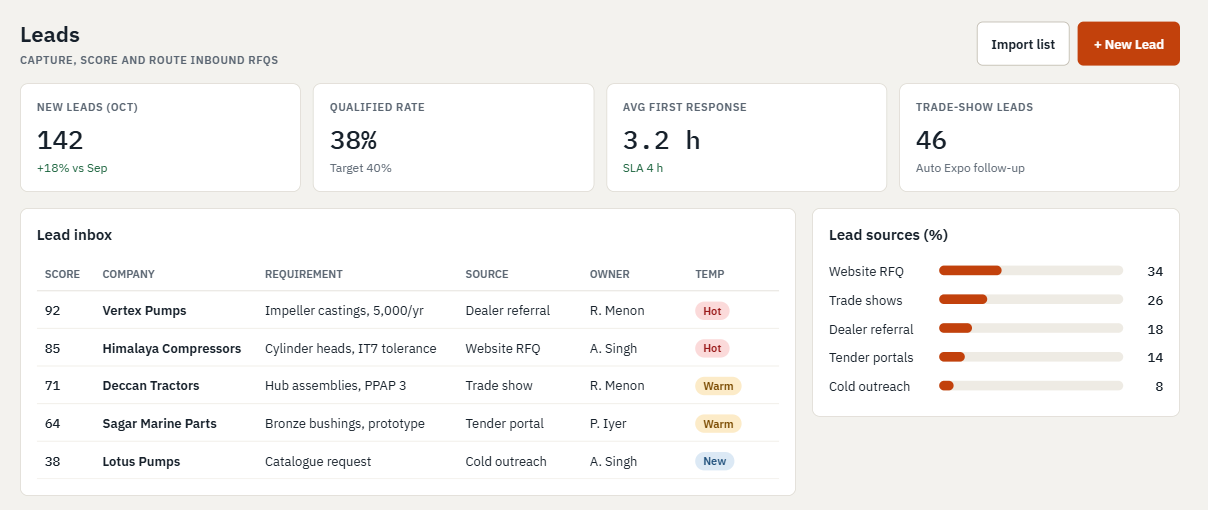
1. Lead and Sales Management
Track all inquiries, and qualify prospects. Manage your sales pipeline, keeping track of the opportunity through to conversion.
2. Dealer and Distributor Management
Keep dealer data up-to-date, monitor the effectiveness of channels, and get a control on distribution networks.
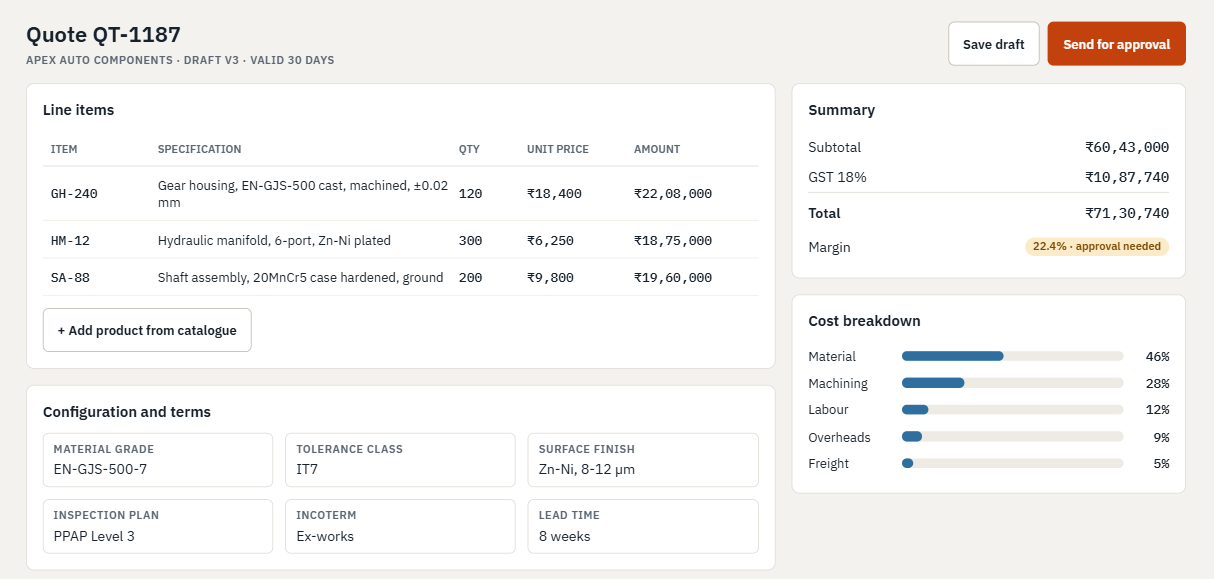
3. Quotation and Order Tracking
Handle customer quotations, track approvals and follow up on pending proposals to speed up sales.
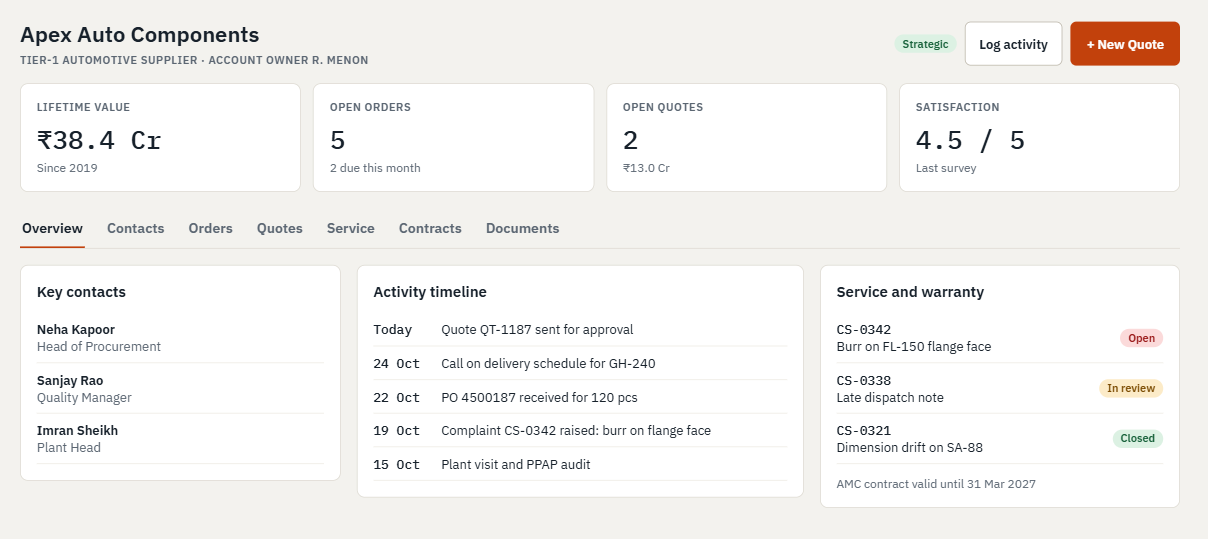
4. Customer Relationship Management
Have customer data, service logs, purchases and conversations all in one place.
5. Sales Analytics and Forecasting
Gain visibility into sales performance, pipeline activity and forecast revenue using reports and dashboards.
6. ERP Integration
Depending on the integration, Connect CRM can integrate with ERP software that will enable the flow of information between sales, inventory, production and order management.
7. Workflow Automation
Automate repetitive tasks, reminders and follow-ups so your sales team can do what they do best: sell!
Advantages of CRM for the Manufacturing Sector
Enhanced Sales Effectiveness
Cut down on administration time for sales reps and enable them to focus on more viable leads and critical customer engagements.
Enhanced Dealer Relations
Facilitate better dealer and distributor coordination via well managed communication and centralized database.
Better Customer Experience
Handling customer contacts more efficiently, communicating regularly and engaging in deeper customer care.
Data-Driven Decisions
Analyze sales data and customer analytics to make sense of trends, track performance and make decisions.
Improved Customer Retention
Track all customer interactions and service requests to help you forge better long-term relationships.
How Can Eduzent Help Manufacturing Businesses?
Eduzent offers software development, CRM development, ERP software, and custom CRM development. Eduzent manufacturing industry solution offers an array of services such as technology solutions, which are useful for optimizing the operational efficiency of the business.
By using our custom CRM development services, Eduzent can assist organizations in looking for a CRM based on their workflows and needs.
When assessing a CRM solution, you can have a conversation with the manufacturer about the needs you have for your organization, like lead management, dealer management, sales management, reporting and integration into your company's other systems.
Difference Between ERP and CRM Manufacturing
CRM and ERP have different, yet related aims.
CRM: Customer relationships, sales pipeline, Lead Management, Customer Service.- ERP: Oversee internal business processes like finance, production, inventory, and procurement.
Using both systems together can assist manufacturers in linking the two types of demand with their manufacturing processes.
Choosing a Manufacturing CRM
Industry requirements: Seek features that are designed for your sales and distribution mechanisms.-
On-Premise: Select a system that can support your business workflows.
Integration: Compatibility with current ERP, accounting applications.- User friendly: Verify that any employee is able to implement the system with as little as possible difficulty.-
Scalability: Choose a solution that will scale with your business.
Support: Assess the support for implementation, training and ongoing maintenance.Before investing in manufacturing CRM software, consider these essential factors:
Manufacturing CRM Implementation Best Practices
Implementation is easiest with clearly defined goals and some sort of plan.
1. Define business goals and measurable KPIs.
2. Prior to migration, ensure that customer data is cleansed and organized.
3. Train your staff and motivate CRM usage on a daily basis.
4. Integrate CRM with essential business systems.
5. Monitor performance and improve workflows continuously.
Next-Gen Manufacturing CRM
How AI, predictive analytics, cloud computing and automation are defining the future of manufacturing CRM.
These tools provide tools for companies to discover new sales opportunities, forecast customer needs, speed up follow-up, and make business information more accessible.
Conclusion
CRM for manufacturing streamlines sales processes, optimizes dealer engagement, and enhances the customer experience.
With Eduzent's CRM software and custom development services, Eduzent provides manufacturers an opportunity to examine technologies that can be tailored to suit their business needs. Selecting the appropriate CRM approach can give manufacturers the edge they need to stay ahead of the competition, implement tighter workflows, and foster growth.
Searching for a CRM for your manufacturing business? Visit Eduzent to learn about their CRM and custom software development services.
Frequently asked questions
Quick answers to the most common questions about this topic.
It helps the makers deal with the customer records, sales leads, dealer relations, and customer service.
Sales productivity, customer relationship management, dealers management and sales forecast are the main benefits of the new design.
Yes. Depending on the systems you use, CRM can pull together sales information with inventory, production and order details through ERP integration.
Eduzent provides CRM software development solutions for the manufacturing industry. Contact the team at Eduzent to speak with us about your company's CRM needs.